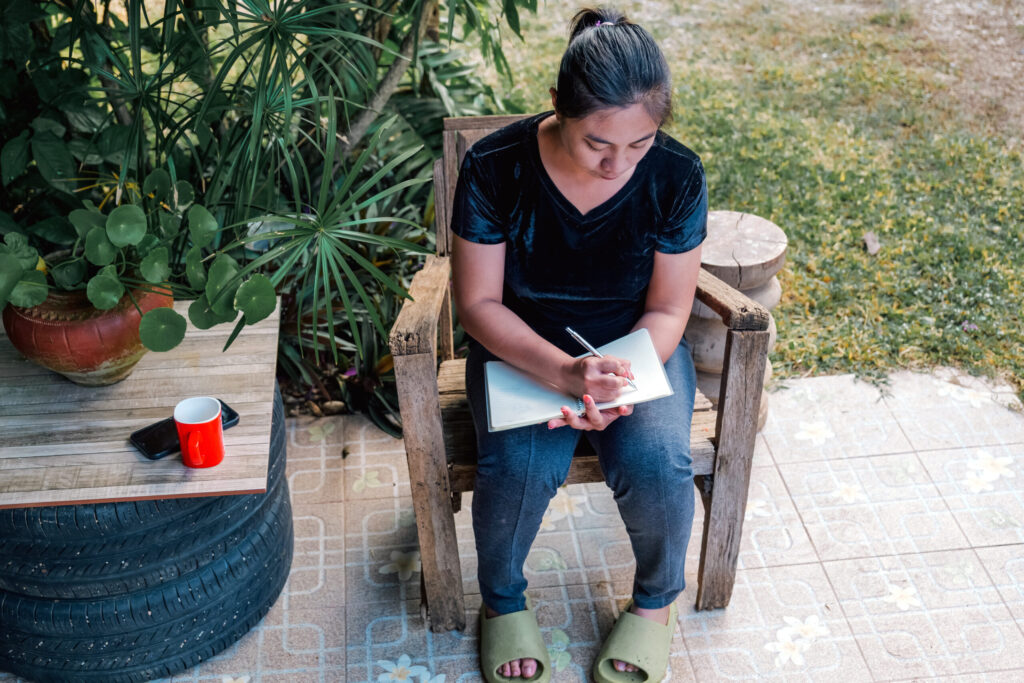
There’s a particular kind of gardener’s regret that arrives every spring, usually around the second week of May, when you’re standing over a patch of bare soil with a seed packet in one hand and absolutely no memory of what grew there last year. Was it the tomatoes? The squash that got powdery mildew? You’re almost sure it wasn’t the peppers — or was it? You stand there a moment longer, hoping for clarity, then plant the seeds anyway and resolve, for what must be the fifth year running, to finally start writing things down.
If this sounds familiar, you are in excellent company. Garden journaling is one of those practices that nearly every experienced gardener will tell you to take up, and that nearly every gardener struggles to maintain. The good news is that the failure isn’t usually about willpower. It’s about setup. The gardeners who keep journals for decades aren’t more disciplined than the rest of us — they’ve just designed a habit that survives the inevitable busy weeks, vacation absences, and that strange three-week stretch in August when nothing seems to be happening except weeds.
This is a guide to building a garden journal that you’ll actually use, year after year. It begins with the case for keeping one in the first place, moves through what to record and which format to choose, and ends with the part most articles skip entirely: how to keep going when the novelty wears off.
Why Keep a Garden Journal at All
Gardens teach in slow motion. A vegetable bed will tell you almost nothing in a week, very little in a month, and nearly everything in three or four years — but only if you can remember what happened in the earlier seasons. Without records, you keep relearning the same lessons. You plant the basil too early again. You forget that the bean trellis cast too much shade on the lettuce. You buy a second hydrangea, identical to the first, having lost track of the variety name on the original tag, which has now bleached to white in the rain.
A journal solves all of this in the most ordinary way imaginable: it remembers things so you don’t have to. More than that, it slowly turns your garden into a teacher. Patterns emerge that no single season would reveal — that your tomatoes always set fruit a week later than your neighbor’s, that the south-facing bed dries out faster than you think, that the rabbits seem to leave the marigolds alone. These small accumulating insights are what separate a gardener from someone who just gardens.
What to Actually Write Down
The most common mistake new journalers make is trying to record everything. They start with elaborate templates, color-coded categories, and weather logs that demand daily attention. Within three weeks, the whole apparatus collapses under its own weight.
Keep it simple. The high-value entries are these:
What you planted, where, and when. This is the single most useful thing a garden journal can do for you. A name, a location, a date. That’s it. If you want to get fancy, add the variety and the source — “Cherokee Purple, Johnny’s Seeds, started indoors March 15” — but a bare-bones entry is still worth ten times nothing.
Notable weather. Not every day — just the events. A late frost in May. A heat wave in July. A two-week stretch without rain. These are the things that will explain a strange season later.
Pest and disease observations. When you first saw aphids, which plants they hit, what you tried. This is the kind of information you swear you’ll remember and never do.
Harvest notes. Even rough ones. First ripe tomato, July 18. Beans peaked the second week of August. Over a few seasons these dates become surprisingly predictive.
Your failures. These matter more than the successes. The variety that bolted, the shrub that didn’t make it through winter, the seeds that simply never came up. Failures are the most expensive lessons in the garden, and writing them down ensures you only pay for them once.
Photos count as entries. A picture of a bed in mid-June, with a date attached, contains more information than three paragraphs of description.
Choosing Your Format
There are essentially four kinds of garden journals, and each has a real tradeoff.
The classic bound notebook is romantic and durable and looks wonderful on a shelf. It is also impossible to search, easy to lose, and incapable of holding a photograph without some glue and patience. If you love the physical ritual of writing, it’s a fine choice. If you don’t, the notebook will mostly sit empty.
A three-ring binder with printed pages solves the flexibility problem — you can add new sections, rearrange beds, slot in receipts and seed packets — but it is unlovely and tends to live in a drawer.
A spreadsheet is searchable and tidy and entirely lifeless. Some gardeners genuinely enjoy them. Most don’t open them after April.
A dedicated app, used on the phone you already carry into the garden, is searchable, photo-friendly, and synced across devices, which means an entry made standing next to the tomatoes shows up on your laptop that evening. The tradeoff is that it requires a phone in your hand — which some gardeners prize as a screen-free space, and others find perfectly natural.
The honest answer is that the best format is the one you’ll actually open. If a leather notebook by the back door makes you smile, use that. If the friction of writing by hand is what kept you from journaling the last five years, the phone in your pocket is a better tool. There is no purity test in gardening.
The Sticking-With-It Part
This is where most articles stop and where most journals quietly die. Here is what actually keeps the practice alive over years.
Lower the bar dramatically. An entry can be one sentence. Planted the snap peas today. That counts. You are not writing literature; you are leaving a trail of breadcrumbs for your future self.
Tie it to an existing rhythm. Sunday morning coffee on the patio. The moment right after you finish watering. The walk you take through the beds after dinner. New habits stick when they piggyback on old ones.
Give yourself permission to skip weeks. Gardens have quiet stretches — early winter, the mid-summer doldrums — when there is genuinely nothing to record. A journal with gaps is not a failed journal. A journal you abandoned because of guilt over gaps is.
Keep the tool somewhere visible. A notebook on a hook by the back door. The app on the first screen of your phone. Anything that lives in a drawer might as well not exist.
Lean on photos when words feel like too much. A weekly picture of each bed, taken from roughly the same spot, becomes a remarkable record over a single season — and an extraordinary one over five.
Your First Entry
Don’t overthink the beginning. Sit down — or stand in the garden — and write the following: today’s date, the state of your garden right now, what’s planted and roughly where, what’s blooming, what’s struggling. Add a quick sketch of the beds, or a photograph from each corner of the yard. One thing you’re hoping for this season. One thing you wish you’d known last year.
That’s it. You have started a garden journal. The next entry can wait until something happens — a first sprout, a first frost, a first ripe strawberry — and the one after that can wait, too.
In a few years, you’ll find yourself back at that same May moment, standing over a bare patch of soil with a seed packet in your hand. Only this time the patch won’t be a mystery. You’ll know exactly what grew there last year, and the year before, and probably what should grow there next. The garden will have started talking back. That’s the real gift of a journal — not the writing, but the conversation it slowly builds between you and the small piece of ground you’ve chosen to tend.